AIFS Institute

Studying future schools,
so what works reaches every child.

The AIFS Institute is the research and advisory arm of the AI Future School Project. Through sustained, evidence-based study of future schools worldwide, it distills learning methods and school models that families and schools can actually use.

~40Future schools tracked
47+Reports, commissioned and published
4Research areas
100+Guests in AI and education innovation

01 · What we do

Research, advisory, publishing:
it all comes back to the child.

RESEARCH

Applied research

Focused studies of real questions: tracking schools worldwide, field and online interviews, surveys and case analysis.

  • Commissioned workCustom studies and reports for partner schools, organizations and clients
  • International exchangeSharing education cases from China in global conversations, for a more diverse dialogue

ADVISORY

Advisory & capacity building

The Institute leads the AI Future School Project's school partnerships: readiness reviews, teacher training, and co-designed courses that bring research into real classrooms.

  • For schoolsAI readiness reviews and roadmaps
  • For organizationsCurriculum design and instructional support
School partnerships →
PUBLICATIONS & DIALOGUE

Publications & convenings

Books, articles and research briefs; plus the Changemakers Summit and live conversations that connect researchers, educators and families.

  • PublishingBooks, white papers, columns and briefs
  • ConveningSummits, forums, conversations and international partnerships

02 · Research areas

01AI & learning
02Design thinking
03Purpose & growth
04Global pathways

03 · Selected reports

Every report
answers a real question.

Full reports are available to partners and clients.

AIFSAI Future School
Project
Research
Report

No. 01 · AI & LEARNING

The Alpha School Learning Model

What two hours a day really means

AIFS Institute

The most useful lesson from this school isn't AI.

  1. "Two hours" isn't an AI miracle.It's mastery-based learning and adaptive practice, scaled up by AI. The method is old; the execution is new.
  2. Parents aren't paying for content.Tuition averages around $50,000 a year, yet many of the academic tools are free or low-cost, such as Khan Academy. The real value is structure, Guides and peers.
  3. Material rewards remain controversial.Points and prizes build habits fast, but whether they grow intrinsic motivation is still debated.
  4. Copy the principles, not the school."Precision learning" and "giving time back to projects" can start at home.
AIFSAI Future School
Project
Research
Report

No. 02 · GLOBAL PATHWAYS

Learning at Stanford Online High School

Why an online school endures

AIFS Institute

How does an online school stay relevant for this long?

  1. More than a high school.Founded in 2006, it serves grades 7–12, full-time or one course at a time.
  2. Longevity isn't about technology.Small live seminars, university-level courses and student-run clubs: what online schools lack most is belonging.
  3. Freedom needs structure.Behind the autonomy are clear schedules, seminars and feedback. Freedom without structure is just drift.

Further readingHua Zhang wrote the foreword to the Chinese edition of the new book by Dr. Tomohiro Hoshi, Head of Stanford Online High School.

AIFSAI Future School
Project
Research
Report

No. 03 · PURPOSE & GROWTH

Homeschooling in China

The family as the smallest unit of a future school

AIFS Institute

In the AI age, the smallest unit of a "future school" is the family.

  1. The hard part isn't curriculum, it's coordination.Good resources are abundant. What homeschooling families lack is someone who sees the whole picture and makes trade-offs.
  2. Parents don't need to teach every subject.Their more important role is cheerleader, not lecturer.
  3. Community matters more than curriculum.Family co-ops and micro-schools are growing; peers and belonging are homeschooling's biggest gap, and its biggest opportunity.
  4. Homeschooling is about to surge.In China and worldwide, homeschooling families will grow fast. The barriers to personalized learning are falling, but families still need a support system.
AIFSAI Future School
Project
Research
Report

No. 04 · AI & LEARNING

How K-12 Students Use AI

And what it does to their learning

AIFS Institute

Using AI more doesn't mean learning more.

  1. It's not whether, but how.As an answer machine, AI skips the thinking. As a sparring partner, it amplifies learning.
  2. AI only for answers lowers grades.Students who routinely use AI just to solve problems or get answers score about 22% lower on final exams.
  3. Think, ask, then teach.Think it through first, then ask AI, then explain it to someone else: the order matters.
  4. Children often learn AI habits from parents.How a family uses AI shapes children more than any school ban.

Other reports include Global Cases of AI Future Schools, Purpose in the AI Age and a study of online high schools worldwide: 47+ in total.

04 · Publications & dialogue

Research that becomes books,
and reaches families everywhere.

The World Is Our Classroom
The World Is Our ClassroomChina Teachers' News Book of the Year
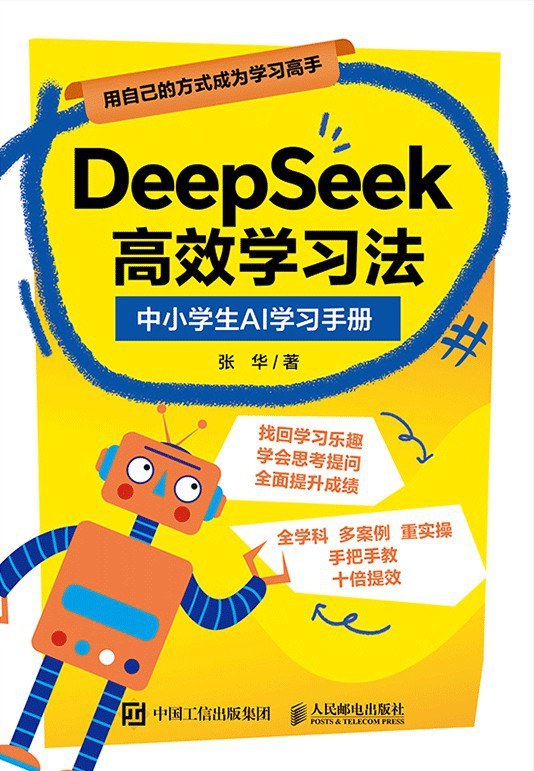
Learning Smarter with DeepSeek
Learning Smarter with DeepSeekAn AI learning handbook for K-12
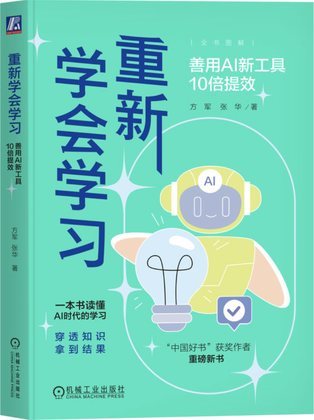
Relearning How to Learn
Relearning How to LearnLearning in the AI age
Coming soonAI Future SchoolAI未来学校by Hua Zhang
AI Future SchoolForthcoming · Cheers Publishing

Live conversations

Conversations with 100+ AI and education innovators, viewed more than 6 million times.

  • Li JiangLi JiangAI × Design ThinkingDirector, Stanford AIRE
  • Zipei TuZipei TuAI × Big DataAuthor, The Big Data Revolution
  • Wenyong LiuWenyong LiuAIGC × EducationAuthor, AIGC Reshapes Education
  • Jun FangJun FangAI × Product DesignAI technology expert
  • AiliyaAiliyaAI × Education InnovationAI PhD, Nanyang Technological University
  • Rujun GeRujun GeAI × BlockchainSingularity University
More guests ↓
  • Frank YuanFrank YuanAI × Future SchoolsDirector, ACT China AI Future School Certification
  • Zhaoyuan MaZhaoyuan MaScientific ThinkingProfessor, SUSTech
  • Xuefeng LiuXuefeng LiuMathematical ThinkingDoctoral supervisor, Beihang University
  • Linlin ShuiLinlin ShuiDesign ThinkingExecutive Dean, School of Design Thinking, CUC

05 · Work with us

Commissioned research and exchange.

Get in touch

Leave your details,
and we'll be in touch.

Commissioned research, report briefings or academic exchange: tell us about your organization and what you need. We reply within 24 hours.

We use your details only to get back to you, and never share them with third parties.